AI Transformation
AI transformation that reaches people.
Humanity and effectiveness.
I help teams and leaders embed AI effectively in their organization — strategically sound and human at heart.
Humanity and effectiveness.
I help teams and leaders embed AI effectively in their organization — strategically sound and human at heart.
AI transformation is my core focus — these are the themes that carry it.
Not a replacement, but an extension. How using AI can enrich thinking, acting and learning across the whole organization — from strategy to everyday work.
Not just a method, but a way of thinking. Seeing waste, creating value, looking honestly at processes, and enabling and seeing people.
Teams that truly collaborate. Structures that enable ownership instead of preventing it.
Culture is created in small moments. Leadership, work-life balance, humanity, connection. These aren't soft skills — this is the work.
A clear view of the value stream and clear workflows with Notion and similar tools. Systems that are actually used.
Leading through change means staying in learning mode yourself. Genuine reflection instead of tidy answers.
Impact happens through people. Connection between them creates creativity and resilience — and deserves a place in every change, right from the start.
No standard programs. Everything that emerges, emerges through conversation.
I support organizations through change driven by AI — from process analysis to culture work, always close to the people it affects.
Leadership questions, decisions, career transitions.
Case discussions and input within the team.
Value stream, process optimization, mindset.
Information security, especially for AI adoption.
Right now, Claude and Notion are my core — lean, secure, ready to go. Where an organization already works with Confluence, Jira, GitHub or Google tools, I meet them there. The tool follows the organization, not the other way around. What matters most are usefulness and security.
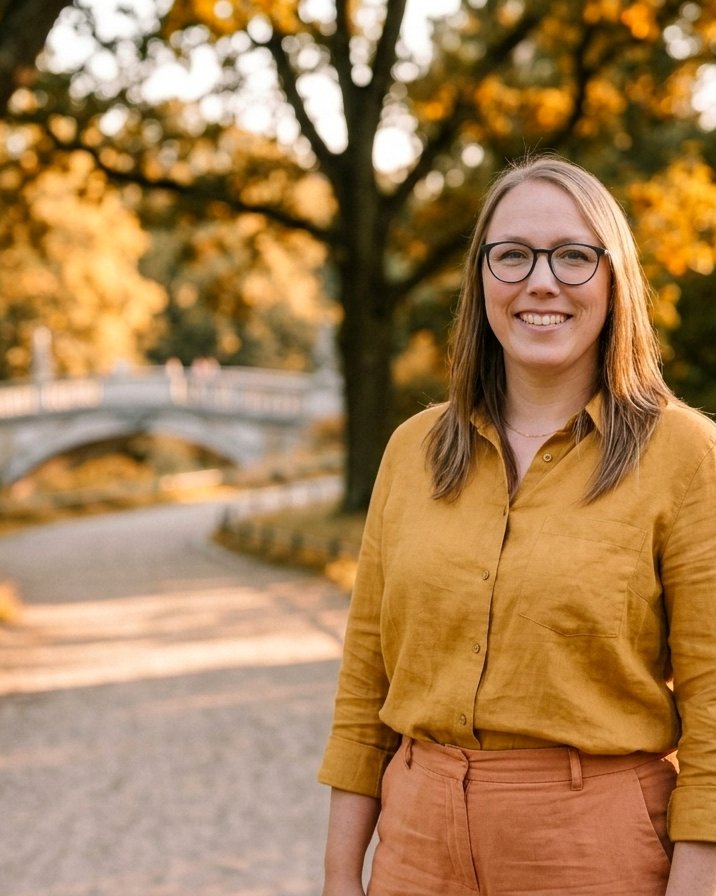
I'm driven by the question of how organizations can keep developing without losing sight of the people in them.
For me, humanity and effectiveness are grounded in my values and my stance, as well as my expertise and experience.
What matters to me: trust, openness and respect as the basis of collaboration. A culture that allows mistakes and spaces to learn where real development becomes possible. Structure that gives orientation instead of narrowing things down.
I grew up in a values-based family environment that still shapes me today. In economics, I spent a long time studying institutional economics: the question of why systems function the way they do, and why people act the way they do.
Driven by curiosity, I then ended up, rather by chance, in the internet infrastructure industry – an exciting world strongly shaped by American culture. As the only non-computer-scientist in the company, I had a steep learning curve: I worked on Linux systems and took full responsibility for a software product – from strategy through launch to customer conversations, sales, marketing and talks. That generalist role showed me how much can be achieved with professional curiosity and strong communication skills. Alongside my job, I completed my engineering degree, because I wanted to deepen my technical knowledge formally as well.
After that, I started as an advisor to the management board at a larger electrical engineering company. There, I introduced OKRs at the top level, coached leaders and teams, and built up Lean Management at two sites from scratch — from strategy all the way to running workshops on the shop floor.
Then came starting a family — and with it, the clarity that I wanted to put my accumulated knowledge and values to use on my own terms. Today, I support people and teams in collaborating on the basis of humanity, respect, openness, curiosity and trust — while still achieving great results. I'm convinced: only both together truly make organizations successful.
My way of working has evolved over years through many conversations, mistakes, and genuine transformation processes.
Reflecting honest perceptions takes courage. An outside perspective can often help uncover blind spots.
I like clarity. But clarity as an invitation, not as pressure. Good structure makes things easier, not harder.
No "you have to do it this way." I accompany, you decide. It matters to me to enable the people I work with.
The path is part of the work. I show how things come about — that makes the result understandable and transferable.
What people say about working with me.
"I greatly value Linda's clarity, her stance, and her ability to keep both people and organizations in view at the same time. I can wholeheartedly recommend her for transformation and organizational development processes, as well as for leading and developing teams and for personal development."
Jens Pfennig Founder | Member of the Advisory Board"Linda was a fantastic sparring partner, especially when tackling complex decisions – her thoughtful insights and ability to navigate challenges made her an indispensable ally."
Prof. Dr.-Ing. Thomas Dorka Professor of Applied Computing Science"Linda, you're a far-sighted, structured and goal-oriented person with great values. You inspire me again and again, and you work with people in an empathetic and appreciative way! I'm still glad today that I got to work with you."
Christina Gunkel Head of CSR & SustainabilityWe start with a no-obligation conversation, where I listen, ask a few questions, and we look together at whether and how a collaboration fits. After that, you'll receive a proposal for how to proceed. We always look at what individually fits your or your organization's needs, and adjust along the way if needed.
Almost everything can also be done remotely. Sometimes that even makes more sense. Just reach out and ask!
The price depends on the scope and is discussed together in the initial conversation.
Confidentiality is the foundation of any support I provide. What's discussed in our conversations stays between us – even when I'm working on behalf of a company, I don't share any content with third parties without your consent.
In one-on-one coaching, we work on your concrete leadership questions, decisions, or career transitions. As a systemic coach, I'm your process companion. Through systemic questions, reflecting back what you say, and hypotheses, I accompany you. You decide what your topic is and where the process goes.
Supervision is the reflection of topics within a team. The person bringing a case describes their topics and challenges, the team reflects and offers input. As a supervisor, I guide you through a structured process.
Lean is more than a method to me. It's a mindset: recognizing waste, creating real value, looking honestly at processes, and enabling people instead of just optimizing workflows. The people who do the work are always the experts in what they do.
Ja!
If you're curious: I'll listen, ask a few questions, and then we'll see if it's a good fit.